
Quick answer
The waterfall feels sticky because its rock is travertine — a porous limestone crust deposited by the mineral-rich stream — which grips bare feet like coarse sandpaper rather than turning slick. The surface stays walkable even under flowing water. Entry is free, and the falls sit inside Buatong Waterfall–Chet Si Fountain National Park.
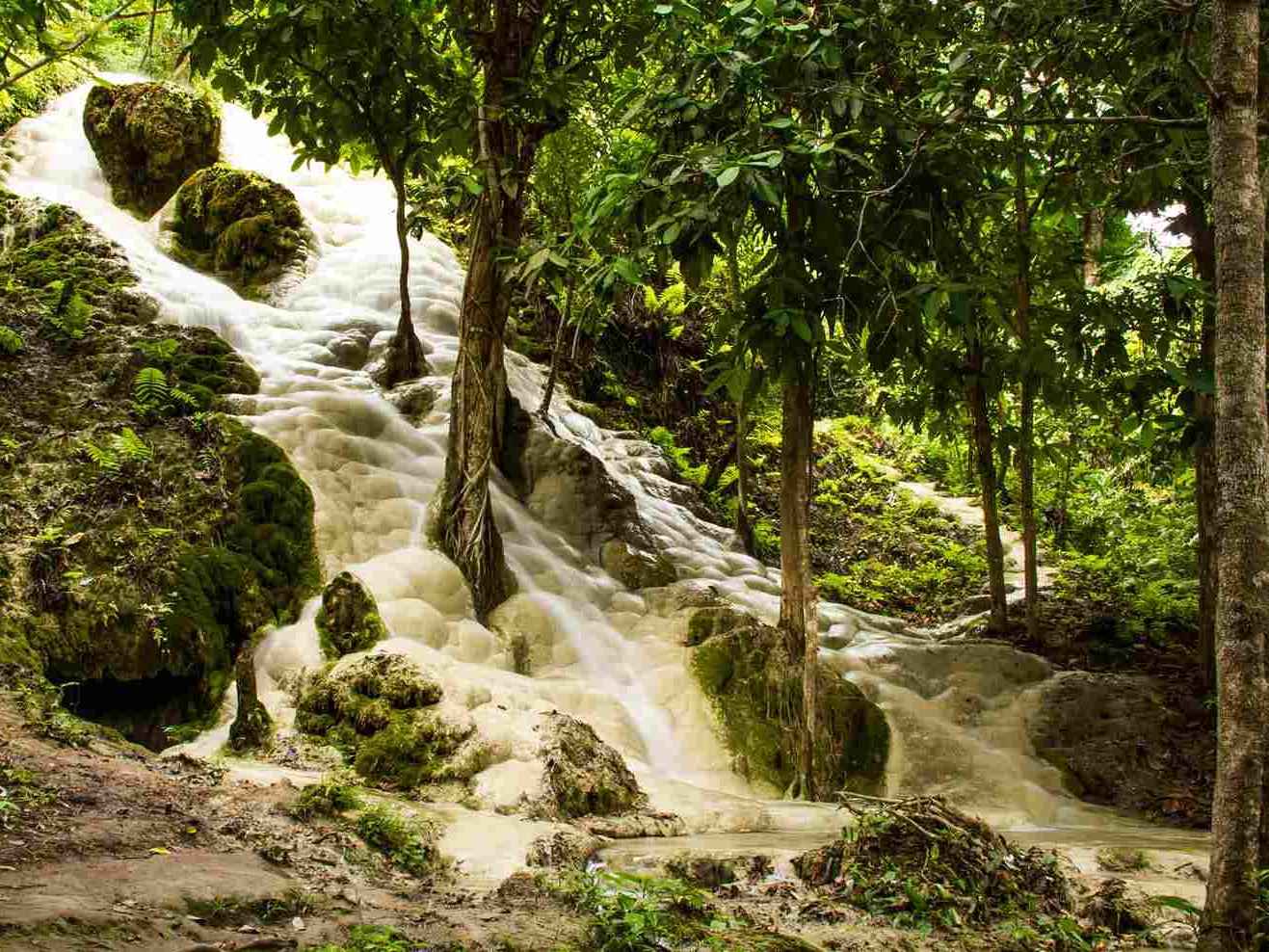
Visitors climbing the cascade barefoot is the detail that makes people search for sticky waterfall chiang mai why is it sticky before they ever arrive. The rock underfoot does something ordinary river stone never does: it holds. Where wet granite turns to glass, the pale ledges of Bua Tong Waterfall behave like a natural staircase, dry-feeling even as water pours over them. The surface is travertine, a rough limestone crust laid down over centuries by the spring-fed stream that feeds the falls. That crust carries a fine, sandpaper-like grain, and it resists the slick film of algae that coats most tropical rock. The result is traction. Feet grip the terraced tiers, hands find purchase on knobbed edges, and the ascent feels closer to scrambling than swimming. This texture, more than the height or the flow, is why the site ranks among the more unusual Chiang Mai landmarks and why the phenomenon draws geology-minded travellers north into the Mae Taeng District. Such formations are rare. Fast, agitated water usually scours rock smooth, yet here the stream lays down more mineral than it strips away, building a raised, rippled skin along the cascade. Locals long called the site Nam Tok Bua Tong, and the barefoot climb became its signature long before it trended online. The physics is simple once seen: the rock grows outward, and every fresh layer adds grip rather than gloss. Understanding the material changes how a visitor reads the place. The cream-coloured mineral deposits are not moss or mud; they are the reason the climb works, and they explain why guides across the region market a sticky waterfall Chiang Mai tour around a feature that photographs poorly but performs in person. The grip is real, though it is not infinite — bare or wet-grip footwear reads the surface best, and smooth soles find less of it. Set inside Buatong Waterfall–Chet Si Fountain National Park, the falls reward curiosity over spectacle. Readers who arrive knowing the answer to sticky waterfall chiang mai why is it sticky tend to spend their time testing the rock rather than doubting it, moving tier by tier up a cascade that treats limestone as a ladder. That single geological quirk — mineral crust instead of slippery stone — is what separates this stop from every other cascade in northern Thailand.
“The grip is real: every fresh layer of limestone adds traction rather than gloss.”
Scientific Facts Behind the Sticky Waterfall Chiang Mai Why Is It Sticky
The friction-inducing properties of Bua Tong Waterfall are the result of specific geological activity. This natural phenomenon relies on simple chemistry to make the wet limestone rocks climbable.
Calcium carbonate precipitates from the water
High levels of dissolved calcium carbonate flow directly from the upstream spring source. As the cascading water loses carbon dioxide to the air, the mineral settles onto the rocks, building up layers of solid limestone.
Tufa deposits construct the main tiers
The waterfall features a geological formation known as tufa, which is a highly porous variety of limestone. This mineral precipitation process causes the waterfall to expand outward over time rather than eroding the bedrock.
Zero algae growth coats the rocks
The rapid and continuous deposition of fresh calcium carbonate prevents typical river algae or moss from attaching to the stones. Because no organic slime can grow, the rocks remain slip-free even in deep water.
50 degrees of incline are climbable
The limestone tiers slope downward at angles ranging from 45 to 50 degrees. The unique physical texture of the rock creates enough friction for visitors to walk directly up the vertical face.
Calcite crystals create a sandpaper texture
Under a microscope, the surface reveals tiny, pointed calcite crystals that form a rough, sponge-like structure. This porous formation conforms to the skin of bare feet, generating a natural suction effect.
100 meters of total vertical drop
The multi-tiered waterfall system descends through Si Lanna National Park across a total height of 100 meters. The mineral-saturated water continuously coats the entire run in high-traction limestone deposits.
Common Misconceptions: Sticky Waterfall Chiang Mai Why Is It Sticky
Several rumors surround the unique traction at Bua Tong Waterfall, leading visitors to expect a sticky substance on the rocks. Clarifying these myths helps travelers prepare for the actual physical sensations of the climb.
MythThe rocks are coated in a sticky tree sap or artificial chemical
FactThe grip comes from rough limestone deposits that feel like coarse sandpaper, not from any adhesive substance.
MythRunning water makes the limestone steps dangerously slippery
FactThe constant flow of mineral-rich water prevents algae growth, making the wet rock surfaces highly slip-resistant.
MythYou must wear specialized climbing shoes to scale the waterfall
FactMost visitors climb barefoot or in standard water shoes, as the textured calcium carbonate provides natural traction.
MythAccessing the climbing paths requires purchasing an expensive entry ticket
FactEntrance to the national park is free (0 THB), with no fees required to climb the waterfall levels.
Optimal Hours: Sticky Waterfall Chiang Mai Why Is It Sticky
The best time to experience the mineral-gripped Bua Tong Waterfall is between 08:00 and 10:00 on a weekday morning. Arriving during this window ensures you climb the unique, high-friction calcium carbonate deposits before midday crowds and heat arrive.
Cool dry season (November–February)
High tourist volumes on weekends.Sunny, clear skies, 15°C to 30°C.
Ideal for climbing the limestone terraces under clear blue skies. The mineral-rich spring water is crisp, and the lack of rain prevents muddy runoff from discoloring the white calcium carbonate.
Hot burning season (March–May)
Low to moderate mid-week crowds.Hazy skies, hot, 20°C to 38°C.
High heat makes the spring-fed waterfall a refreshing escape, though agricultural haze peaks in March. The active limestone crystallization continues, keeping the surface non-slip regardless of ambient heat.
Rainy green season (June–October)
Low weekday visitor numbers.Humid with showers, 22°C to 32°C.
Heavy downpours can wash debris onto the falls, but they also clear the regional air. The porous limestone grip remains secure even during high water flows.
Weekday mornings (08:00–10:00)
Very quiet, minimal tourist traffic.—
The cool morning air provides the most comfortable climbing conditions. Arriving early lets you navigate the spring-fed tiers before sun exposure heats the rocks and crowd levels rise.
Verdict: For optimal climbing grip and minimal crowds, visit on a Tuesday morning at 08:00 during late November.
Dangerous Climbing Mistakes to Avoid at Bua Tong
The rock at Bua Tong grips bare skin, but that traction disappears the moment you make these common climbing errors. Each one turns a manageable ascent into a slip risk.
Climbing in shoes or sandals
Go barefoot. The limestone gives skin-to-rock grip that footwear cancels out, making smooth soles slide.
Stepping on gray algae-covered patches
Stick to the tan and cream-colored mineral crust. Gray or green streaks are algae, which is slick and offers no hold.
Ignoring the fixed guide ropes
Use the knotted ropes anchored along the steeper sections for balance, especially on the descent when momentum builds.
Rushing the climb near midday
Arrive in the 08:00–10:00 window. Cooler rock, fewer crowds, and more room to place your feet carefully.
Descending face-forward down steep parts
Turn to face the rock and step down backward on the steepest stretches, keeping three points of contact.
Underestimating how long the climb takes
Allow a couple of unhurried hours. The tiers are climbed slowly, and the park closes at 17:00.
Sacred Spring: Nam Phu Chet Si and Nearby Attractions
A trip to the waterfall pairs naturally with a visit to its sacred mineral source and other cultural landmarks in the Mae Taeng valley. Combining natural wonders with local spiritual sites provides a well-rounded day trip from Chiang Mai.
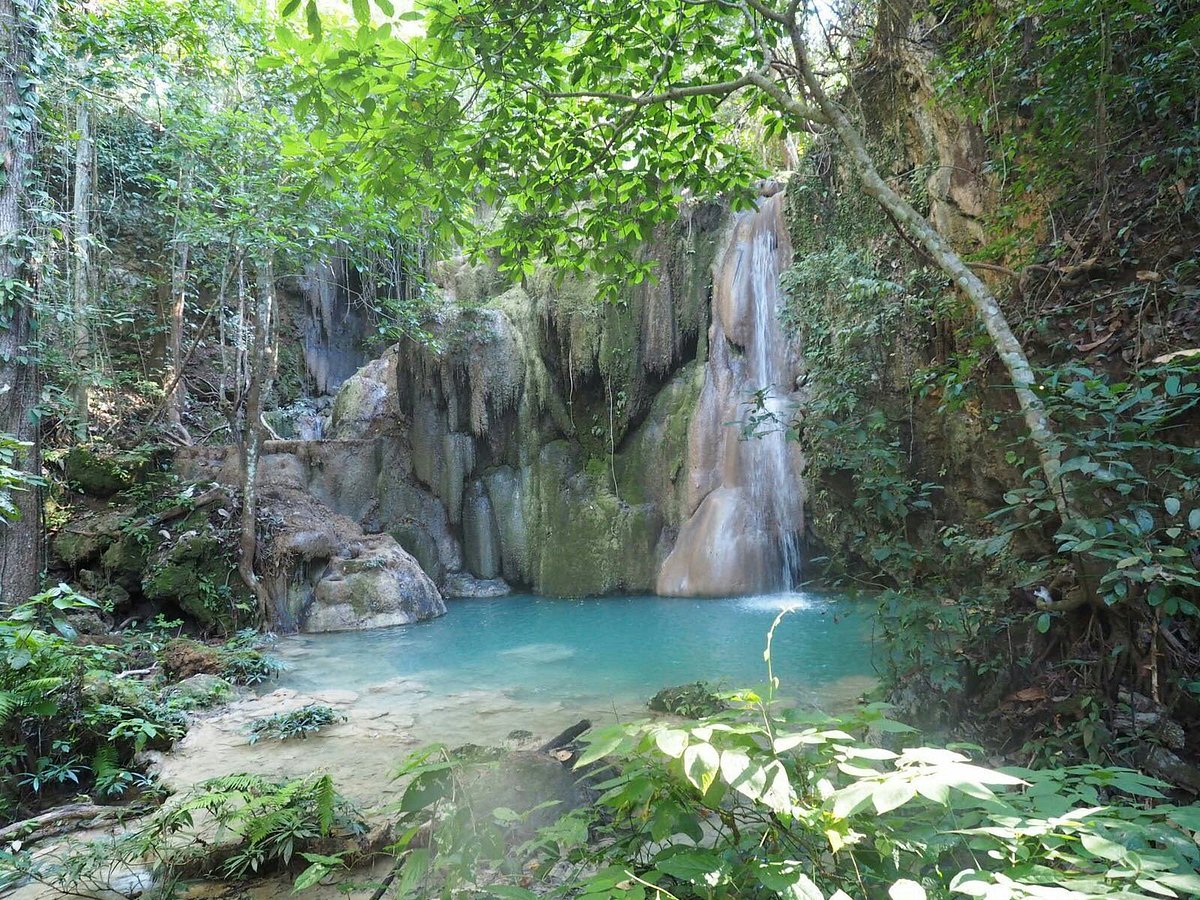
Nam Phu Chet Si
This sacred spring serves as the mineral source for Bua Tong, feeding the falls with calcium-rich water. Locals revere the pool, which sits nestled in a peaceful forested clearing.

Wat Ban Den
This sprawling temple complex features striking blue roofs, detailed teakwood carvings, and elevated views of the valley. It offers a cultural contrast to the natural elements of the park.
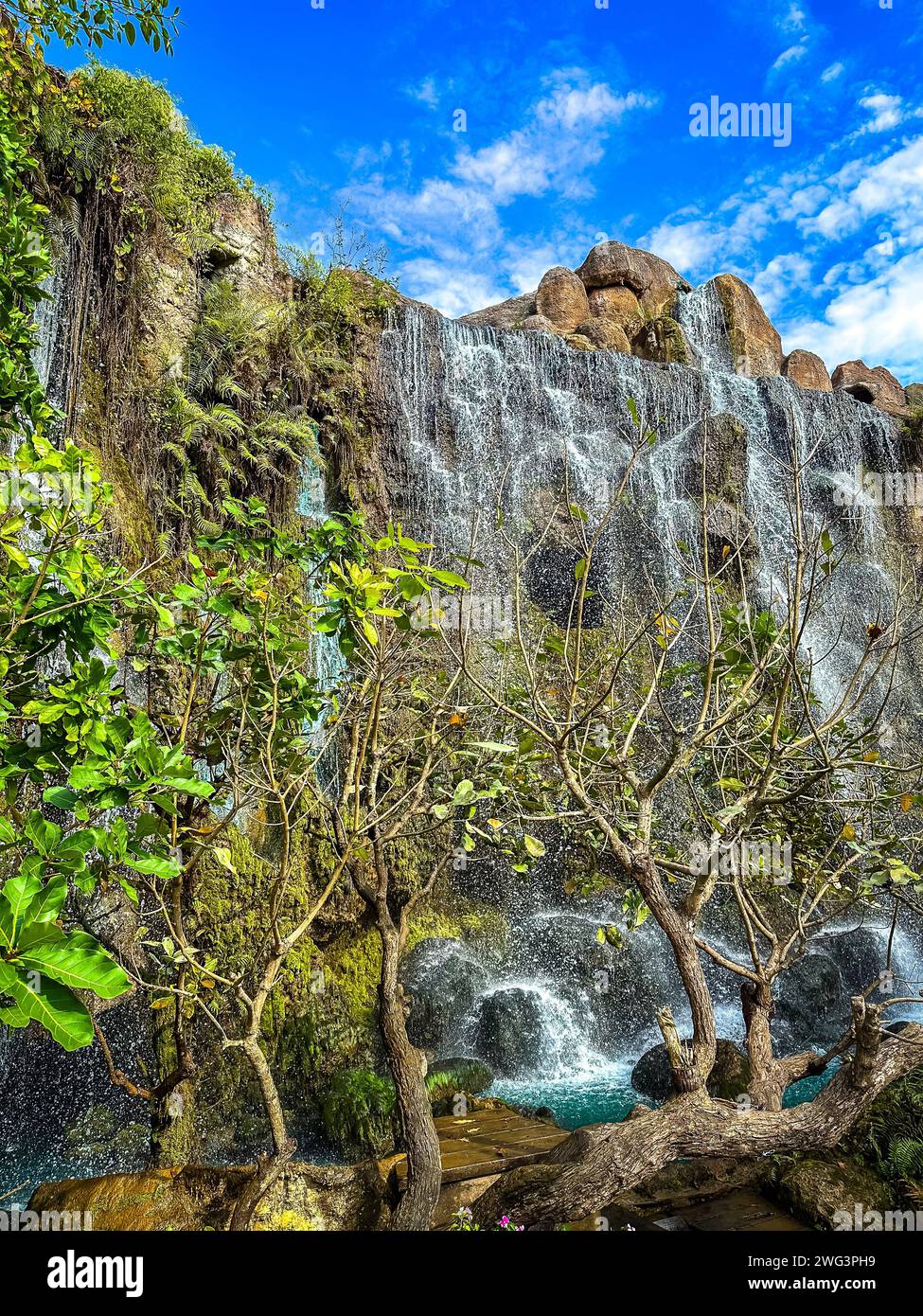
Dantewada Land of Angels Waterfall Park
This themed park contains artificial waterfalls, misty stone pathways, and gardens. It serves as a convenient stop for refreshments and a relaxed walk after climbing the limestone falls.
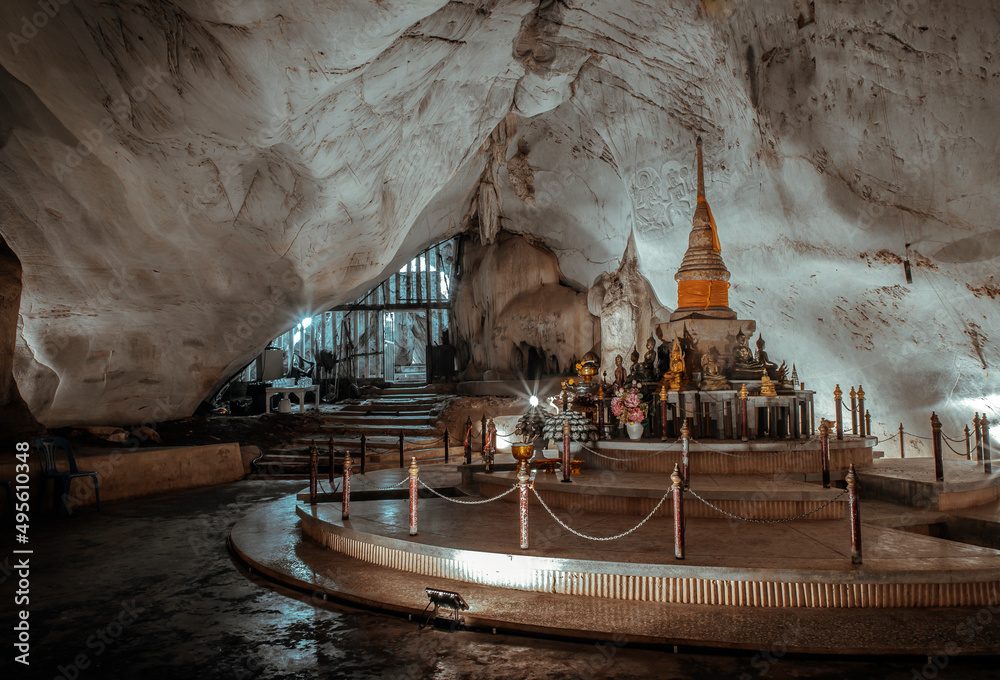
Wat Tham Bua Thong
Located close to the national park grounds, this quiet cave temple contains natural stalactite formations and a small shrine. It is rarely visited by large tour groups, offering a quiet retreat.
Pre-Visit Packing Checklist for the Grippy Falls
The grip comes from mineral crust, not gear, so pack light and plan around a few practical items before you arrive.
-
Save the park phone number — Store +66 53 317 495 in case you need directions or to confirm the 08:00–17:00 hours.
-
Plan an early arrival — Aim for the 08:00–10:00 window to climb in cooler air before crowds build.
-
Skip specialized climbing gear — The limestone crust grips bare feet or plain sandals, so no ropes or boots are needed.
-
Pack a quick-dry towel — You will get wet on the climb, and a compact towel dries faster in the humidity.
-
Bring a dry change of clothes — Leave spare clothing in the car so you stay comfortable for the drive back.
-
Protect your phone — Use a waterproof pouch or sealed bag against splashes and spray near the flow.
-
Wear grippy footwear or go barefoot — Water shoes or bare feet handle the mineral surface better than smooth-soled shoes.
-
Carry water and a light snack — On-site options are limited, and free entry means no queues holding you up.
Check availability
FAQ: Why is Bua Tong Waterfall Sticky?
Everything you need to know about sticky waterfall chiang mai why is it sticky